



If you’ve been following along, Q1 was about getting back into the language after a long stretch of coasting. Ondoku, flashcards, picking up a Japanese novel, and practicing kanji stroke orders. The conclusion I landed on was simple: the goal was never the streak or the schedule. It was making a life where Japanese shows up naturally, studying included, even if just a little. Q2, though, came in swinging. And oh my word, I took quite a hit.

🏫 The school everyone warned me about
Last school year, when teachers asked where I’d been placed next, they winced at my reply. My current school has a reputation, and I went in bracing for the worst. But honestly? I’m having a good time.
A little context might help here. Most people are familiar with the ALT model: an Assistant Language Teacher, almost always a foreigner, who supports English classes in Japanese schools. Usually, the Japanese homeroom teacher leads the lesson while the ALT “assists”.
My setup is different. I plan and teach my own lessons, manage my own classes, and am the only teacher in the room. There’s no co-teacher to fall back on and no one else holding the reins. It’s a bigger lift, but it also means my relationship with the students is more direct.
The sixth graders are the ones with the yankii reputation, and they’re also by far my favorite grade level to teach. They were guarded at first, but once they claimed me, they became genuinely warm, funny, and eager to please. They are the best part of my teaching week.
The fifth graders are a different story. Some of them are absolutely feral, and I mean that with the deepest affection. Teaching that grade feels like that Jurassic World scene with Chris Pratt, trying to manage multiple students at once, keeping everyone on track while managing the chaos that’ll surely unfold if you don’t. But I’ve converted the two most infamous kids, which feels like a significant personal victory. One of even says my class is his favorite.

The fourth graders are noisy in a different way. They’ve only ever had English with an ALT, so in their minds it’s still very much playtime - fun, low-stakes, game-centered classes. I’m working on gently shifting that without killing the enthusiasm. It’s going to take a little more time and I’m trying to be okay with that.
The staff is the icing on the cake. Most of my colleagues are in their twenties. Our conversations cover dating, relationships, work woes, and humor that needs no context. And then there are the older ones, who I easily turn to for advice and guidance. Here, I feel like I’m right in the comfortable middle, still figuring things out, but with people generous enough to make that feel like exactly where I’m supposed to be. The laughs don’t hurt at anll either.
📋 The thing that completely consumed Q2
In Japan, schools periodically undergo formal observations by the prefectural board of education, called a 指導主事訪問 (shidoushitsu houmon). A bigshot curriculum specialist visits, watches lessons, and evaluates how teaching and learning are being implemented across the school.
For teachers, preparation means producing a 指導案 (shidouan) - a detailed, research-style unit plan that documents your teaching approach, your objectives, your rationale, and how everything connects to national curriculum guidelines. Think less “lesson plan” and more “academic paper you also have to perform live in front of an evaluator.” There are drafts, consultations, revisions, more revisions, email chains, and whole-school adjustments.
I👏was👏doing👏all👏of👏this👏in👏Japanese!!🦅
If it had been in English, I could have maybe turned revisions around in an hour. Instead, every line required careful attention, cross-referencing the Ministry of Education’s guidelines for foreign language activities, running things through my understanding of what the Japanese was actually asking me to do. There were stretches where I genuinely wasn’t sure I could get it done to the standard it needed to be. And then I did, and the curriculum specialist liked my lesson enough to suggest I give my activities and teaching style a name so he could share it with other cities.
…Shea Style™? (I’m not sure I like the thought of others teaching the way I do, but I’ll happily take the praise I worked hard for in developing my craft.)
What I’m more proud of is that I didn’t ask for extra time or special treatment. I sat through the same process as every other teacher in the building, with the same expectations and the same deadlines, with the not-insignificant and glaring handicap of doing it in my third language (though if I think about it, it would probably be just as hard in my second).
Of course, the ondoku routine fell away during this period. So did the reading. I tried to hold on to both and couldn’t, and eventually I stopped being hard on myself about it. That’s really just how it goes sometimes. You make peace with what you can’t control and focus on what’s actually in front of you.

🃏 What snuck in when I wasn't looking
Now, here’s the part I didn’t plan: students started coming to my room during recess and lunch to play! Those slots used to be for Anki reviews and writing practice. Now they’re for idle chats and card games, and it turns out that’s been better for my Japanese than either of those two things I planned on. Work-wise, anyway.
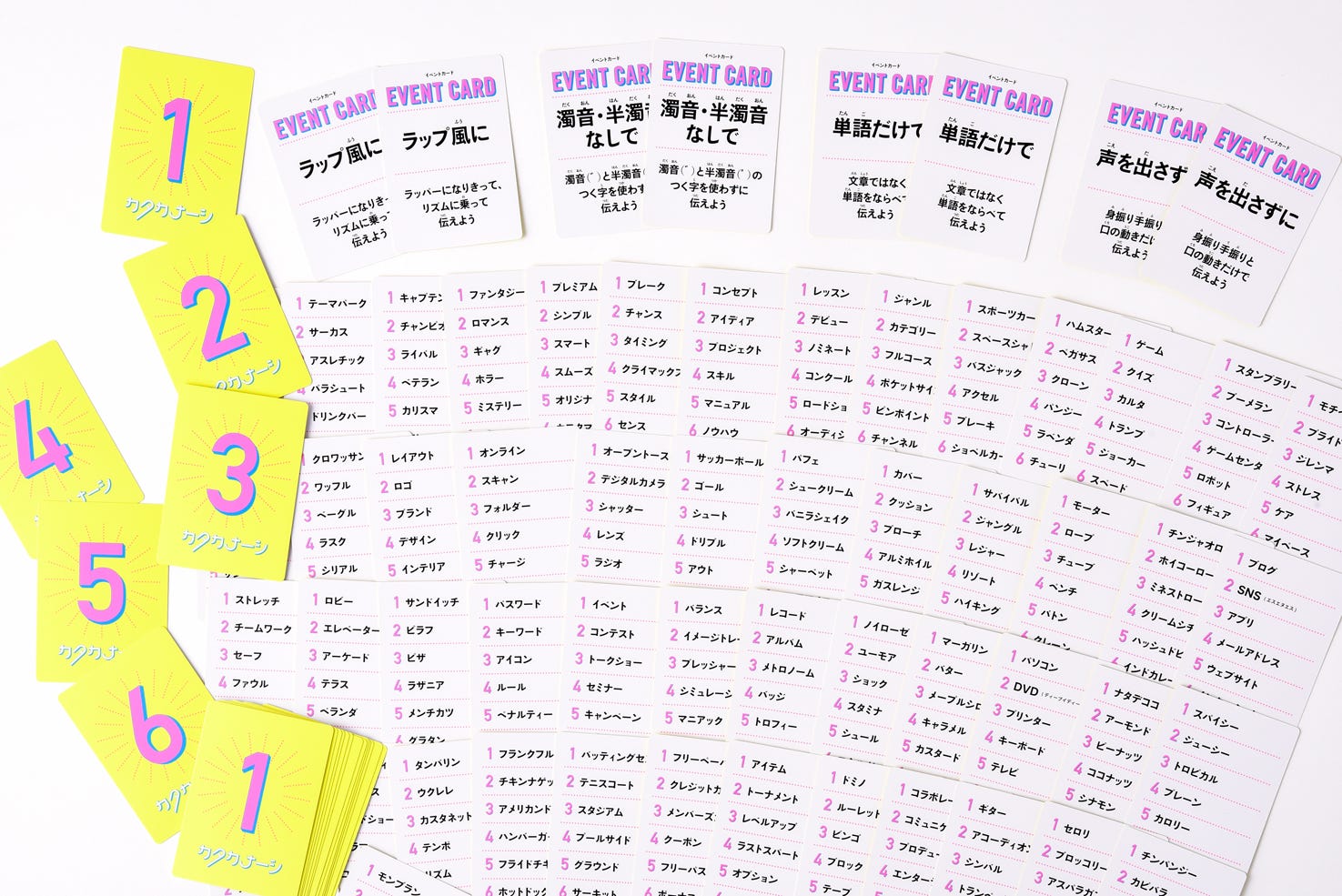
We play カタカナーシ, a card game where you have to describe a katakana loanword without using any katakana words. In Japanese, try explaining テレパシー (telepathy), コンクール (a formal performance competition, borrowed from French), ボーナス (a bonus, whether that’s extra pay or extra points), or カスタード (custard) without reaching for a single borrowed word. It sounds simple until you’re sitting there with your mouth open, realizing that half your vocabulary just became off-limits. It’s designed specifically to build awareness of how deeply loanwords are woven into everyday Japanese. I’ve been picking up ways of explaining things I wouldn’t have found in any flashcard deck.
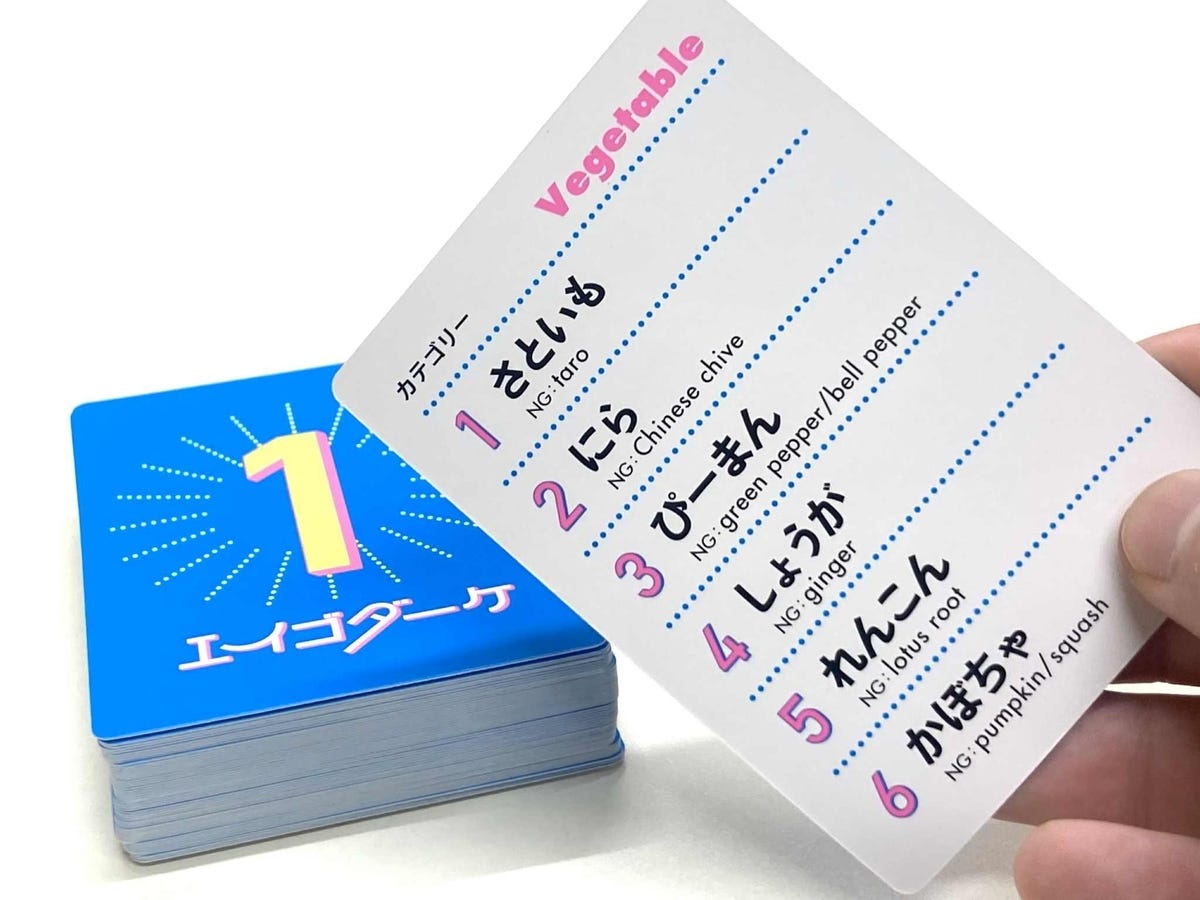
Then I introduced エイゴダーケ (English Only). It’s considerably harder for them and also genuinely useful for me since I’m translating on the spot. It’s not a study method I would have designed for myself. But it’s working somehow. And more than the language practice, the kids keep coming back.
I think, this is what Q1 was really pointing toward. When the structured routine falls apart, which it will at different points in life, the language finds another way in if you’ve built a life where there’s room for it.
✍️ One more thing
This quarter I also got an amazing chance to wite a guest post for Love to Lingo, Christina’s language learning newsletter. Have you heard of this game-changing newsletter? It manages to be informative, warm, and genuinely useful, something you always need to sustain your language learning motivation.
The piece I contributed is called The Scenic Route Into a Language, and it covers a lot of what I’ve been circling here: what happens when you spend years treating your own life as an obstacle to your language goals, and what you find when you finally stop. If any of this has resonated, that one might be worth your time.

🔜 What comes next
I’m not setting hard Japanese study targets for the rest of the year. The shidoushitsu houmon is behind me, and summer is coming, along with a natsumatsuri (summer festival) themed English immersion event I’ve been planning for students who want extra exposure during the break. We’re approaching 200 registrants!
I’ll be heading back to the States after that for a while. My plan is to finish コンビニ兄弟 and take it easy. By the time this posts, I’ll be deep in a national park somewhere, marveling at how some of my inner dialogue is still in Japanese.
When I’m back, I’ll think about my next steps. Maybe I’ll try something new. Maybe I’ll keep playing cards with the kids at lunch. Maybe I’ll kick them out to study grammar. All I know is whatever curveball life throws next, I’ll make the most of it.
To waddling on. 🐧

It's always amusing to hear that you're being placed in the scary school and then end up winning over the students in the end. 😅